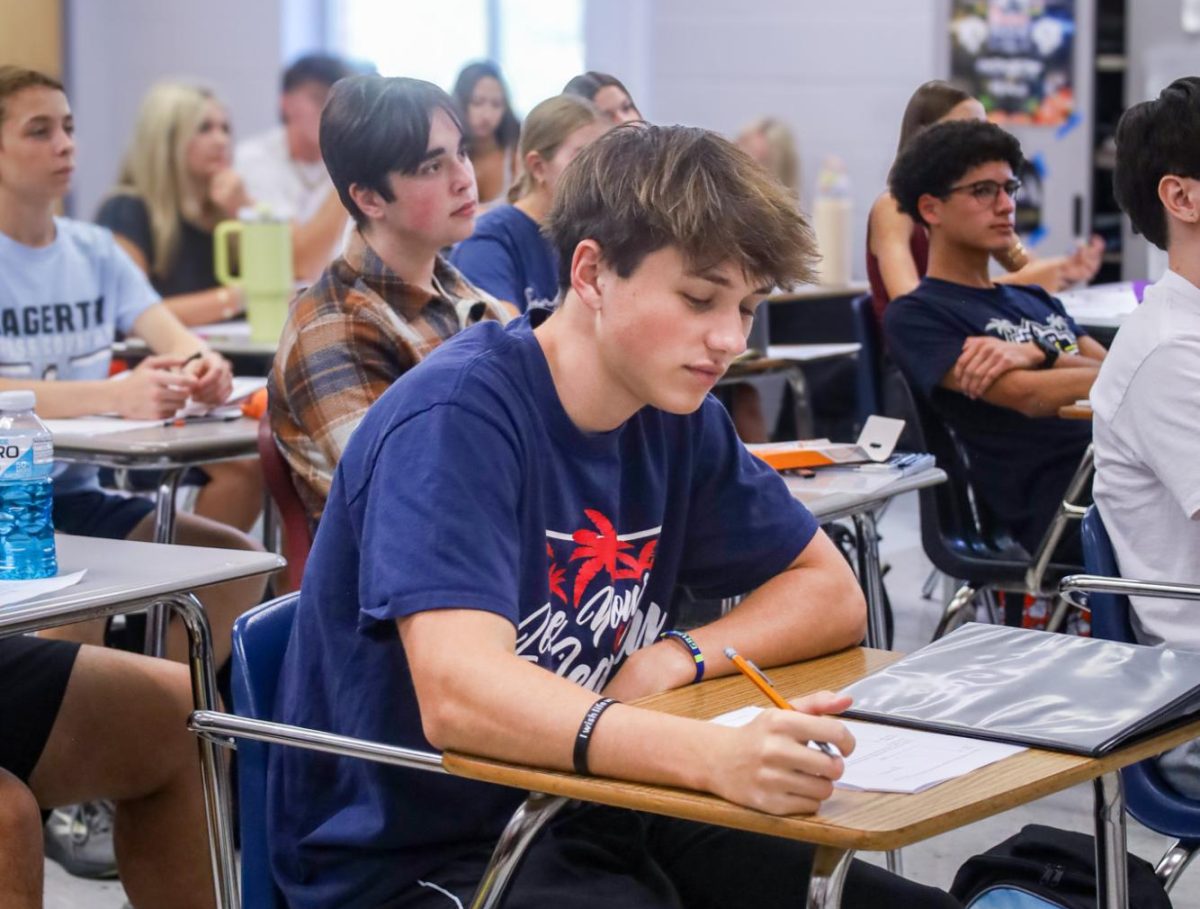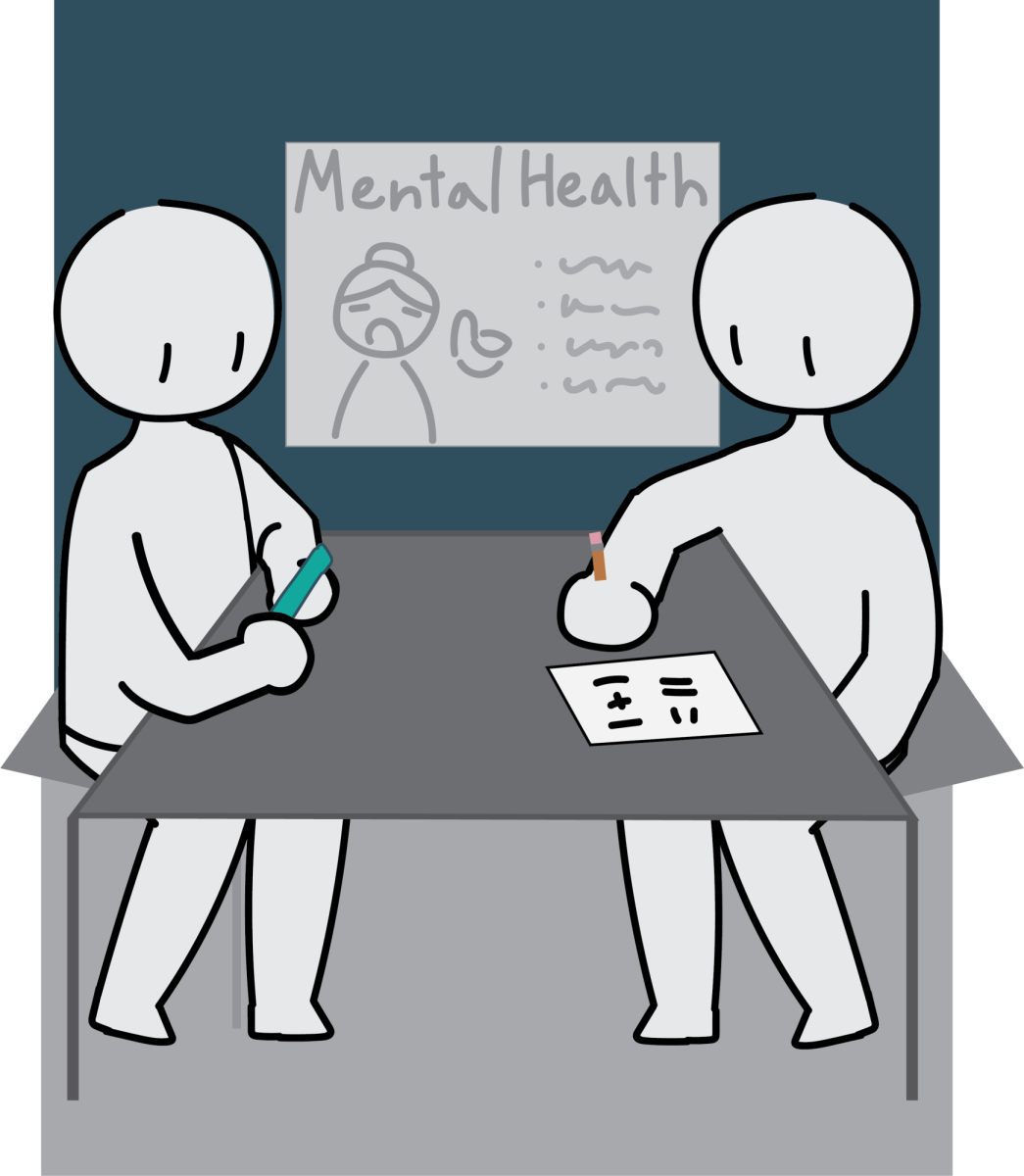
Every year, in a random week in November, English teachers put on the first of many “mental health awareness” videos, the same ones they are required to play each year. Everyone has sat through them—the lights are turned off, a presentation with watered-down slideshows plays and a QR code is passed around to ask students what they learned. The monotone voice tells us about depression, anxiety and how important it is to “take care of ourselves,” but does it really get through to anyone?
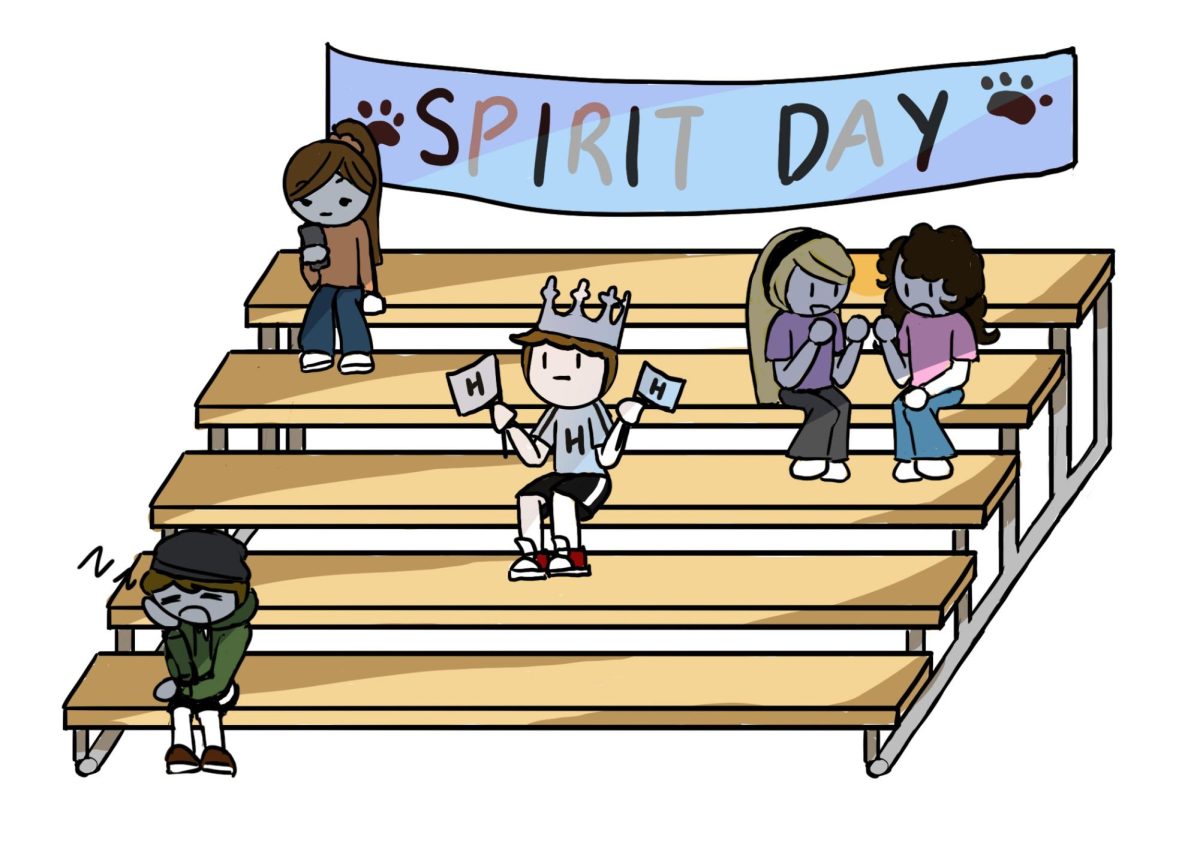
Look around the room: Students on their phones. Heads buried in desks. Teachers busy on their computers. And not a single person is paying attention.
The truth is, the presentations do not work. They are disconnected, outdated and out of touch with what students actually need. Instead of helping, they make mental health feel like another lecture students have to sit through, something that they dread.
To make matters worse, most of these videos seem as if they were made a decade ago. With the same slides each year, they consist of nothing more than lists of mental disorders and their symptoms. Everyone has seen it before, and nobody walks away feeling like anyone cares about their mental health.
The problem is, mental health is not something that can be summed up in videos. It is more than just bullet points on a powerpoint—it is something that students live with and struggle with every day.
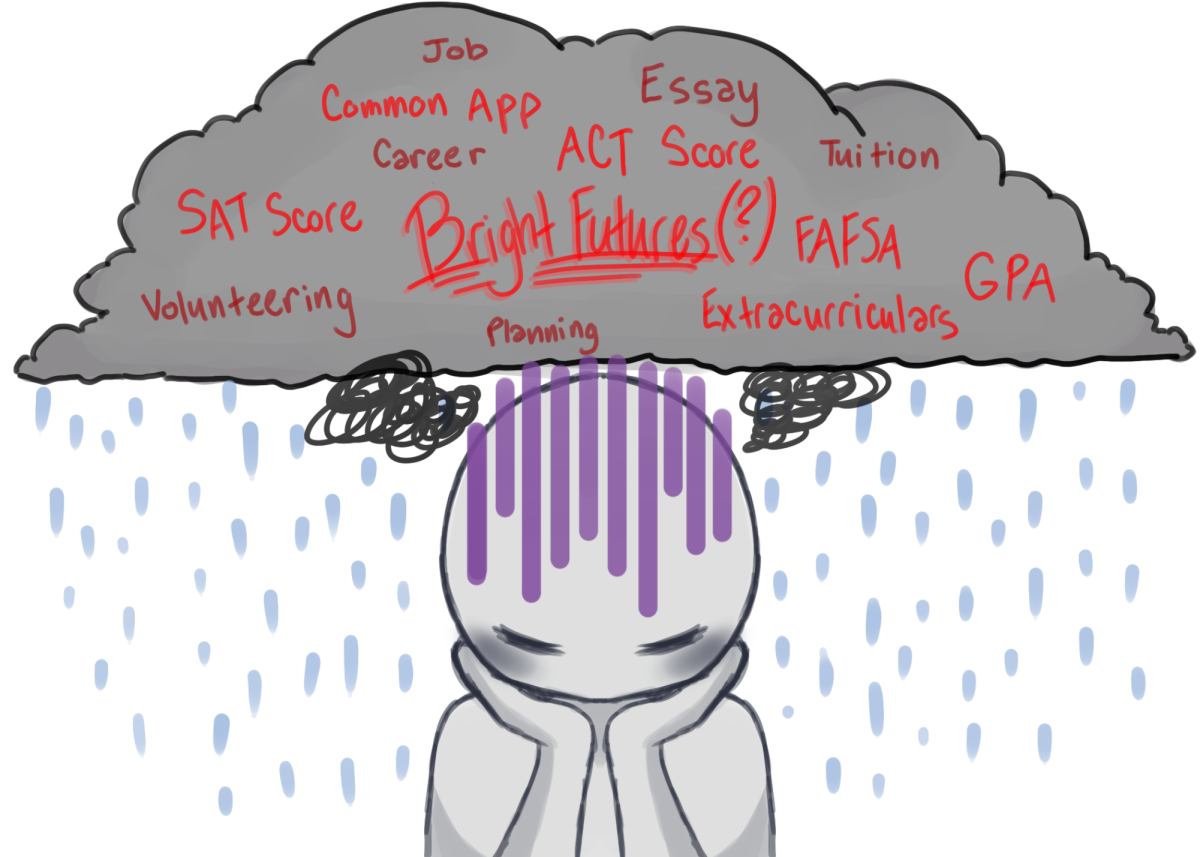
Anxiety, stress and burnout are incredibly prevalent, especially in high school. According to the World Health Organization, one in seven teens struggle with a mental disorder, and one in three with an anxiety disorder. But despite this, schools still treat mental health like a yearly box to check off.
Another fault of these presentations is that they do not address the stigma that often comes along with mental health. Even though the videos preach that “it is okay to not be okay,” many students are still scared of being judged, labeled or mistreated because of their struggles. While covering a wide range of disorders and diagnosis, the videos fail to dispel many of the stereotypes that exist surrounding mental health.
A Meridian Psychiatrics Partners report showed that 49% of Gen Z reported fearing being judged for seeking mental health services, and 70% of teens with mental health disorders received no treatment, with fear of stigma being a contributing factor. When the topic of mental health is brought up only once a year, it reinforces the idea that it is meant to be talked about quietly rather than continuously, and the lack of genuine conversation on the topic creates an environment where students do not feel supported or comfortable speaking up, and instead deal with it in silence.
And the consequences of this neglect are real. In October, three students in Seminole County took their lives within 36 hours. That number is not a statistic—it is a tragedy that has left families, friends and classmates grieving, wondering how it could have been prevented. And yet, the only response was a small notification on Canvas, reading “reach out if you or someone you know is struggling with mental health.” Instead of asking why, or taking steps to prevent another incident, we are expected to just move on. But silence does not fix anything, and ignoring this issue will only ensure that it continues.
What schools need is not more mental health videos, but to encourage real connection. If counselors, teachers or mental health professionals share their own experiences, students could communicate with people who understand their struggles, and realize that they are not alone. Hosting workshops or allowing for one-on-one conversation with professionals could create a safe space for students, rather than telling them to book a 15-minute meeting with their guidance counselor, who only has availability next month.
Schools should also make resources visible and accessible, covering topics like suicidal-thoughts, eating disorders, and self-harm. Instead of putting up posters on bathroom stalls with suicide hot-line numbers, which are often last-minute resorts, schools should focus on addressing the issue proactively by taking time to educate students on helpful websites, books and coping mechanisms.
Not only that, but short-term solutions, can help teach teens healthy habits to better handle their emotions year-round. Schools could normalize taking time off for mental health, rather than giving students an unexcused absence. With 56% of teens taking a day of school off for mental health, and 75% of parents believing it can be an effective tool to support their child’s mental health, small changes like this can make a huge difference in helping manage one’s well-being.
Mental health is not something that can be summed up in slideshows and QR code response boxes. Instead, it should be a topic that is prioritized, just like academics. But until schools take mental health seriously, and open discussion surrounding topics like depression, suicide and self-harm are not seen as taboo, these “awareness” videos will continue to be ignored. Mental health is not just another chapter to be covered in class, it is a reality that students live with every day, and one that deserves real recognition, care and empathy.