The U.S. prides itself for ranking highly in many things: military strength, GDP and education. However, that reputation feels less inspiring when applied to statistics on health. The United States faces the highest obesity and Type 2 Diabetes rates in the world, and is ranked first in average health spending out of the 38 countries by the Organization for Economic Co-operation and Development.
At both state and national levels, leaders have challenged nutritional standards to alleviate these health concerns. Most recently, the Trump Administration reset the U.S. Nutrition Policy, placing an emphasis on “real food” that is not overly processed. A new, inverted food pyramid was released in January with new dietary recommendations to promote a more balanced diet. These standards will go on to affect school lunches and federal nutrition programs.
The state of Florida has also come out with their own program inspired by the new initiative, named Healthy Florida First, for which over $5 million dollars have been allocated towards testing household foods for harmful contaminants like microplastics and bacteria.
De Santis’ program has found arsenic in 28 popular candies recently, and while no products have been officially recalled, there have been recommendations made encouraging citizens to limit intake of candies. While stricter regulations is a positive, the Federal Food and Drug Administration’s Closer to Zero Initiative has already seen success. This has caused different groups to doubt the intentions of this initiative. The National Confectioners Association called this program “misguided” for not basing the tests on approved regulatory standards, citing the Federal Food and Drug Administration’s current data on to be more accurate.
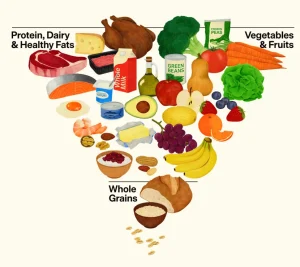
The national guidelines urge citizens to decrease the consumption of Ultra Processed Foods, which was not an emphasis in previous guidelines. This recommendation is backed by research linking UPFs to cardiovascular issues, obesity, mental health issues and a higher mortality rate. This push will likely have positive impacts, as it is reported that UPFs make up more than half of the average daily calories consumed at home.
The guidelines also take a much firmer stance on artificial sugars, which are cited to provide no nutritional value to the consumer and are linked to gastrointestinal, neurologic and cardiovascular issues. The new suggestion recommends that total daily sugar intake should be ten percent of daily calories, or about one 16-ounce can of soda a day.
While the national recommendations are stricter in needed areas, some of the language used can feel confusing, and even contradictory at times. The website at one point suggests that citizens “enhance mineral bioavailability through food preparation techniques,” which sounds like an AP Bio Student trying to get the complexity point for an FRQ on cooking.
The recommendations themselves have issues. Despite being widely consumed in America already, proteins such as dairy and meats are given the most prominence, while plant-based alternatives are given minimal representation. This is contradictory to what other experts recommend, as having a higher ratio of plant to animal based proteins is linked to lower rates of cardiovascular disease. The over-emphasis on red meats and dairy is additionally strange as they have a high saturated fat ratio, while the guidelines recommend that saturated fats make up less than ten percent of daily calories.
The fact sheet from the U.S. The Department of Health and Human Services claims in regards to the new guidelines that, “For decades, the Dietary Guidelines favored corporate interests over common sense. That ends today.” This feels ironic after The Physicians Committee for Responsible Medicine revealed that out of the nine authors of the guidelines, seven have ties to the meat and dairy industry. Federal law rightfully requires the Dietary Guidelines Advisory Committee to represent balanced points of view and avoid bias in their guidelines, which makes the new guidelines not only seem potentially corrupt, but likely unlawful.
It is unlikely that swarms of people gather around every five years to base their diet on whatever guidelines the current administration releases. However, they are still official and should be taken seriously. While plans to change school lunches have not been made explicitly, the regulations are expected to affect standards going forward, as there are higher recommendations for protein intake, and lower daily recommendations for grains than previously suggested.
The biggest change would come from the amount of processed foods in schools, with children reportedly obtaining 59% of their daily calories from UPFs and 79% of subjects in a national report describing an “extreme need” for increased funding to expand scratch cooking and reduce ultraprocessed foods. Since the new guidelines will go on to shape the way school lunches are created, it is very likely that schools will get more support to move away from processed foods in the coming years.
In order to lose the reputation of being one of the least nutritionally healthy nations, the U.S. needs to continue on the path of promoting a balanced diet and strengthening their regulations. The new guidelines and initiatives rolling out are a step in this direction, though it is a slightly shaky one.