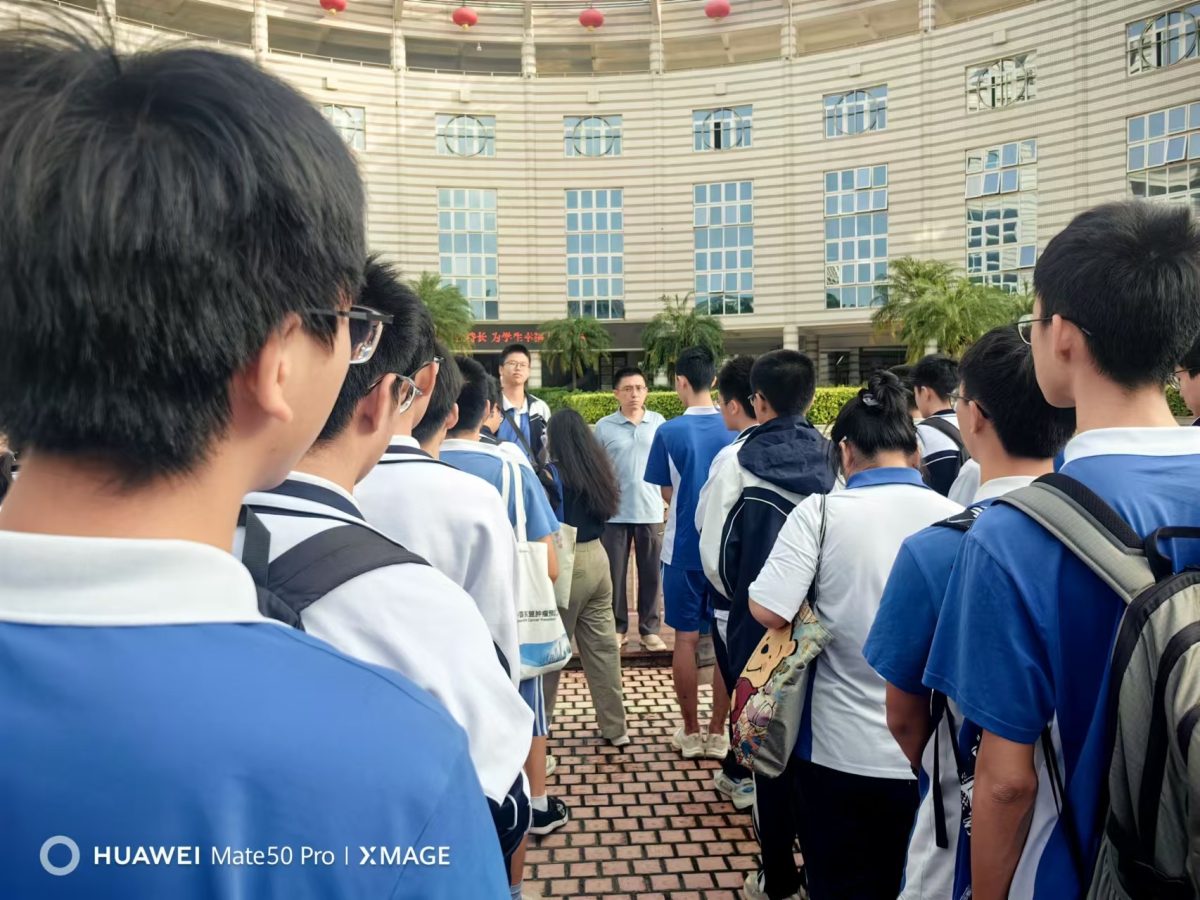
For most students, arriving at school around 7 a.m. and leaving at 2:20 p.m. is considered a normal school day. However, for many students in China’s public high school system, the schedule looks very different. Students may wake up around 6 a.m. for morning physical exercises before beginning a class schedule shared with the same classmates throughout the day. Although regular classes may end around 6 p.m., the school day often continues with mandatory evening study sessions that can last at least another four hours, pushing dismissal close to 10 p.m.
This is what life was like for Chinese and Math teacher Zhenzhen Zhang in high school. Having this intense mandatory schedule everyday, only being able to return home two days a week.
“Gaokao is pretty much the only thing, [so] everybody is so pressured to prepare for it,” Zhang said.
Data from 611study.icu, a project created to collect self-reported schedules from Chinese high school students, reflects these routines. Among more than 6,000 submitted responses, about half of the students reported starting school between 6 and 7 a.m., while many also reported leaving school after 10 p.m. Additionally, the data showed that 32% of students study more than 100 hours per week, which is more than 59.5% of the total time in a week. For students attending boarding schools, weekends are also often limited, with many returning home on Saturday morning before heading back to campus by Sunday afternoon.
The reason behind these long schedules and tightly structured routines is closely connected to China’s education system and the Gaokao, which is officially known as the National College Entrance Examination. Organized nationwide by the Ministry of Education of the People’s Republic of China, the Gaokao serves as the primary pathway for high school graduates seeking admission into universities. Unlike the American college admissions process, which often considers extracurricular activities, essays and standardized testing together, the Gaokao is heavily centered around examination scores.[1]
Gaokao
Following the establishment of the People’s Republic of China, the government rebuilt the country’s higher education system using the previous Republic of China education structure, creating a more unified national examination system. This system has become a critical part of every single Chinese citizen’s life as it influences college admission, while being an important part for governmental regulation of the people.
Xuanyao Huang, currently a high school student in Shenzhen, China, said that the system of Gaokao is fair and unfair at the same time. For a student, all that matters is that one test, because it determines everyone’s future based on purely academic standards.
“It values the score more than who you are, a student can be more competitive than you just because they cram more practices and it doesn’t even matter if they have any idea what they want to do in the future,” said Huang.
But from a governmental point of view, stricter education helps with national goals, selecting talents as developmental resources with the military backing resources. It also helps to organize citizens and maintain a peaceful, lawful, and respectful society by implementing moral study as a mandatory course.
Across East Asia, similar systems that validate score over personal characteristics exist in South Korea and Japan.
Pressure
The long study hours and strict routines were not intended to define the daily lives of Chinese high schoolers. Instead, they developed due to increasing competitions surrounding Gaokao. Due to geographical and economic factors, higher educational resources remain unevenly distributed among provinces, “The resource allocation to Beijing and Shanghai (municipalities directly under the central government) is unfair to students from other provinces,” junior Zheng Liu said. Liu currently studies in Shenzhen,China.
In response to these competitive, highly disciplined, and exam-focused models of education, the Hengshui system was formed as a model for Chinese high schools.
The Hengshui system is named after the high school that formed it, having some militaristic assets such as irregularly strict schedules, boarding requirements and propaganda-like statements such as “work hard for your future.” This gave those schools with the system a higher college admission rate, leading to advantages to the reputation of the campus. Therefore, the system has grown more common across high schools in China.
Though it brings a higher college admission rate, feedback from the experience is not all positive. Most people want more freedom and time to do things in their interest, especially teenagers who are experiencing great changes in their life roles and responsibilities.
The partly militaristic Chinese education includes the following: all students will be assigned the exact same classes, the Ministry of Education directly assigns these classes, a strict schedule is established that gives directions of what to do at a precise time, strict control over students’ social life, and prohibiting relationships among students and social groups.
Aside from school systems, the content and planning by teachers also exert pressure on students. Zhenzhen Zhang, a Chinese and Math teacher at Hagerty, was in the Chinese education system through college. “So what they do is, [in] the first two years of high school, you’ll learn all the knowledge you’re supposed to learn. And then the last two years of high school, you only review everything you have for Gaokao, you don’t learn anything after it,” said Zhang.
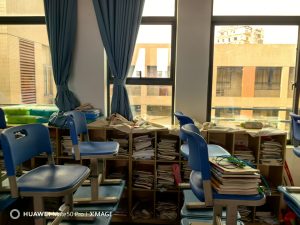
The purpose of it is to be efficient and have time for huge amounts of practice, but Liu revealed that around 40 textbooks will be consumed during these two years. “It doesn’t have a positive effect on students’ overall health and the quality of their study,” said Liu.
Students, as a result, have become accustomed to this pressure, they are numb to it and have started accepting it as life. Year after year of complaining has exhausted them; they’ve become too lazy to even continue to complain.
“Students live almost like zombies,” Liu said.
A gem made from pressure
While sharing a similar education system characterized by high pressure on students, Japan, Korea and China all have high PISA scores, which shows the academic performance of students in these countries are in great condition.
“The Asian system does better if it gives better basic education,” senior Zafarbek Tokhirjonov said. Tokhirjonov attends Hagerty but has lived in Japan and experienced both western and Asian education.
The common education system found in southeast Asia does not just have benefits for graduation rates and producing strong students, but it benefits individual students as well, although in an unusual way. Pressure can be destructive, and to overcome it is a great challenge, with some students crumbling under the weight. Each person will have their own struggles and follow their own path. Zhang specified the pressure will shape you, forcing the strength out of you to overcome later challenges in life.
“The system is very strict, so if a student can go through it and thrive, it basically proves you can do anything,” said Zhang.
Jiang also mentioned that the system forces you to have good time management, and it’ll be your personal strength later in life. After she started study in U.S. high school, time management and freedom of choices helped her in a large scale.
“It’s giving you a really solid foundation and kind of knowing how to manage your time,” said Jiang.
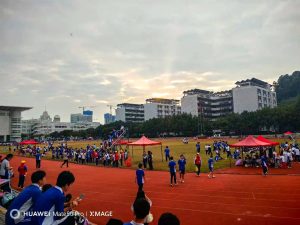
While Hagerty students may spend time in the afternoon attending clubs, performing in a sports team, volunteering for their community and following their passions, Chinese students are still in class continuing their studies and reviewing until late at night for the Gaokao. Despite the higher pressure to perform well in Chinese education, is education in the United States truly better?
The differences between the two nations are more than students’ classroom environments, schedules and the testing system. These schools show the necessity and prioritization to create a productive society through how much pressure students face in their school surroundings.
Although the Chinese system is often criticized for its pressure, strictness and governmental control, it provides discipline, mental strength, a stronger academic foundation on average students and a more standardized, unified path toward opportunity and the future. At the same time, the U.S. system offers greater flexibility and personal freedom while also facing criticism over unequal access to resources and opportunities, as it prefers leadership and connections over participation and task-oriented academics only.
Overall, the comparison between the two systems leaves an ongoing question about what education should prioritize: efficiency and performance, or individuality and personal development.
“I think the U.S. system is not only benefiting the students who worked really hard; it will benefit hardworking students of some portion, but also for students who have resources, like financial, connection resources, they evaluate this applicant in every aspect. But for the Chinese system, if you work hard, you get a high score, then you’re set. All you need is to learn from the teachers, study extremely hard in school, and you can be successful.” Zhang said.