Skateboards, bikes… the bus?
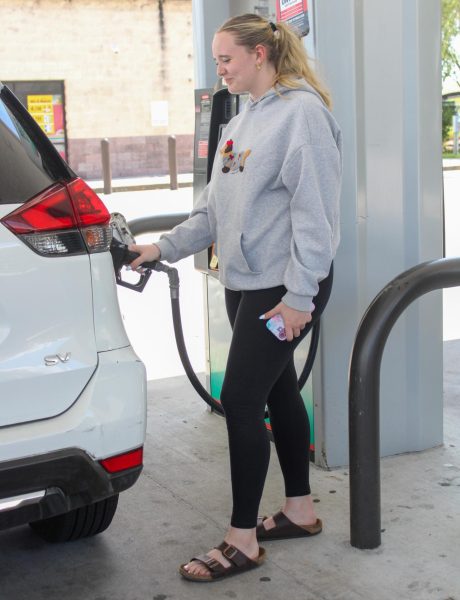
With the price of gas going up and up, drivers are considering alternative ways to travel.
Since Feb. 28, gas prices on average in the state of Florida have risen from $2.98 to $3.88 per gallon, largely influenced by the ongoing war with Iran. Globally, the price has risen over 50 percent. With the oil supply dropping 11 million barrels a day, this is more than the oil shocks of 1973 and 1979 combined. According to the executive director of the International Energy Agency, Fatih Birol, this will be the worst oil crisis in history.
“Last time I went to get gas, it was like $41 [and] I had only gotten gas a week prior, a week, so it shouldn’t have been that [much],” senior Jimena Chumpitaz said. “That was crazy. I didn’t even know what was going on.”
Students who own trucks or sports cars are impacted even more.. Senior Isabella Bujaj drives a Mercedes, which runs on premium gas, and has seen her average tank fill increase by $20 a tank.
“Once it reaches $80, I’m not gonna be able to do a full tank,” Bujaj said. “I think it’s dumb, because that’s almost half my paycheck.”
With events like graduation, school dances and college preparation on the horizon, seniors are hit especially hard as they already have many costs to cover.
“Prom dress, Grad Bash and then I have to pay for the commute to and from school every day,” senior Solimar Servin said. “And then I have work, so I have to go to and [from there] as well. I drive a pretty decent car that saves gas. But it adds up.”
The increase in gas prices is also expected to make school trips, such as sport tournaments and conventions, more expensive, as costs of flight and car travel have gone up, and families will need to pay more.
“If it’s not affordable for the [trips] that parents have to co-pay for, then it just might not be in their budget to allow for these things to happen,” bookkeeper Missy Clarke said. “We want people to come to Hagerty, and so we need to have opportunities for students to do fun things, to go to a tournament in the Dominican Republic, like the girls volleyball team did, or [the] Jacksonville lacrosse tournament.”
In Florida, there were discussions of removing the 23.5-cent per gallon tax on gas, though Governor Ron DeSantis made a statement that there is “no simple fix” for the rising prices and that the problem would be best handled at the national level. As the crisis worsens, many may have to make changes to afford it.
“I don’t know what I’m going to do because I live 30 minutes from school,” Chumpitaz said. “I’m probably going to have to go out less with my friends if that’s the case. I’m not gonna spend 40 extra dollars every week or so, just because [the] stupid gas won’t let up.”
Counseling intern Alyssa Villani lives in Voulsia county and has a commute of around 45 minutes to work at Hagerty, and had to adjust her budget due to the increase in gas prices.
“I’m filling it up a lot with my commute,” Villani said. “So I’m paying a lot in gas each month… I’ve had to re-evaluate where to shop for groceries. [It’s affecting me] in other areas of life too, I have a certain amount of free spending money, and now that’s less because I’m spending more on gas each week.”
The Environmental Protection Agency announced they would allow for year-round use of a higher ethanol gas blend, E15 to lower gas prices as it is cheaper, though more harmful to the environment. It is generally banned during the summertime season as it does not comply with standards under the Clean Air Act. The EPA also plans to release 400 million barrels of oil from reserves gradually. While these efforts will help dampen the issue, it will not fix it, and gas prices are expected to fluctuate, especially as the war continues.
“It’s scary, because you’ll see it on social media, and be like, ‘Oh, it won’t affect us,’” Bujaj said. “This is one of the parts where you’re seeing it starting to affect us. And that’s more like an eye opener.”