$26.4 million.
That’s how much Seminole County Public Schools fell short of breaking even this school year.
The district is facing a new wave of budget cuts and reallocations, and next school year is supposed to hit hard. Between scholarships for students to attend non-public schools, a change to the AP funding policy and lower enrollment, the county has been losing more and more streams of income
In the past, the district has relied on rainy-day funds to fill gaps of long-term funding, but the safety net is gradually disappearing.
“If we continued to fund our deficit from reserves, we would have three years before they would get critically low, below 4%,” school board member Autumn Garick said. “Which means that the state could come in and take over our schools.”
A state takeover would mean stripping the local government of any say in the county’s education system. This would effectively take all say away from the locals over staffing choices, curriculum, and student programs, giving it to the Florida department of education in Tallahassee—an outcome that has already been seen throughout the state.
“[This] is something I hope we never have to find out,” Garick said. “It would mean that we would lose control. Instead of our programs and staffing being determined at a local level, it would be through the state Department of Education.”
In an effort to prevent this, the district is working to find ways to save money. However, available funding is quite limited.
“We asked the superintendent to make sure all of the impacts have been considered.” school board member Kristine Kraus said. “We want to minimize any impact that [we] can day-to-day, but following the comprehensive budget reviews and discussion by the superintendent and our staff.”
One factor leading to the shortfall is how the state allocates the public education budget. A new development on this front is the expansion of taxpayer-funded vouchers and scholarships allowing parents to use public funds for private, charter, or religious-affiliated schools, and they have altered how schools and districts look at and receive funding.
“In the past three years, between $4.5 and $5 billion [have been] given [away],” Garick said. “Non-public school options [have gained funding] rather than our public schools.”
A big contributor to this is enrollment money. The state Department of Education pays schools a certain amount per student enrolled, but more incentive for non-public school attendance has made enrollment decrease over the past couple years.
“We [only] get so much money from the state every year. It’s roughly, for general operating funds, about $105,000, give or take every year, to run the school,” Principal Robert Frasca said. “That doesn’t [include] for salaries and utilities.”
Dual enrollment, where students attend college courses through a local institution while in high school, has become increasingly popular, with many students attending both Hagerty and Seminole State College or UCF. Dual enrollment in particular draws money away from the school to provide for the student’s attendance to the local college.
After the pandemic, virtual school became a more popular option. And as a result of this decrease of in-person public school attendance, the amount of money coming in has decreased.
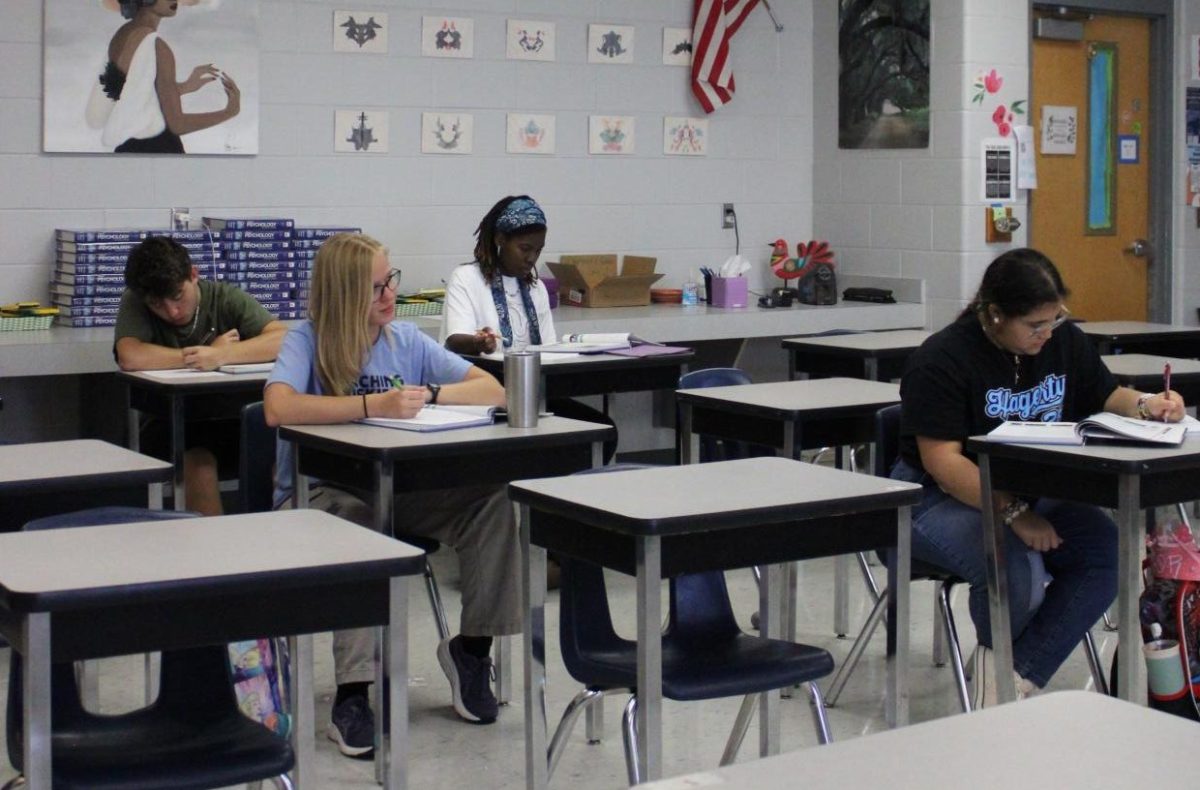
Previously, AP funding could be used to make ends meet where government money could not. However, the scope of AP budgets has also shifted recently. Within campus, the shift within AP funding has forced the school wide reevaluations.
“We used to get [about] $700,000 a year that I could spend on just about anything that we needed in the school on campus.” Frasca said. “The rules to that have changed, and that money has to be spent directly [on] the AP classes now, [for example,] I used to be able to use that money to fix something in the auditorium, [but] now, it specifically has to go back to just AP classes. That shrinks what we can get done.We have to use other funds now.”
The budget crisis has not affected Hagerty quite as much as some schools—only two positions were eliminated—but students and staff are feeling the impact, and it is up to Principal Robert Frasca on how to manage the changes.
He says that the school had been lucky to have such a large AP budget, but the pressure is now on individual departments to provide for their own monetary concerns more than ever before. One example being the athletic department, which will institute a $25 processing fee next year.
“[Now it is] more on Athletics to raise that money, as opposed to being able to use some of the the general school funds to support some of those end-of-year trips for teams that qualify for playoffs and stuff.” Frasca said. “We’ve instituted a new $25 athletic processing fee for next year, so anybody that is participating in athletics, in order to get cleared when they submit their paperwork, is going to pay that, that’s going to help us a little bit to cover some of [the deficit].
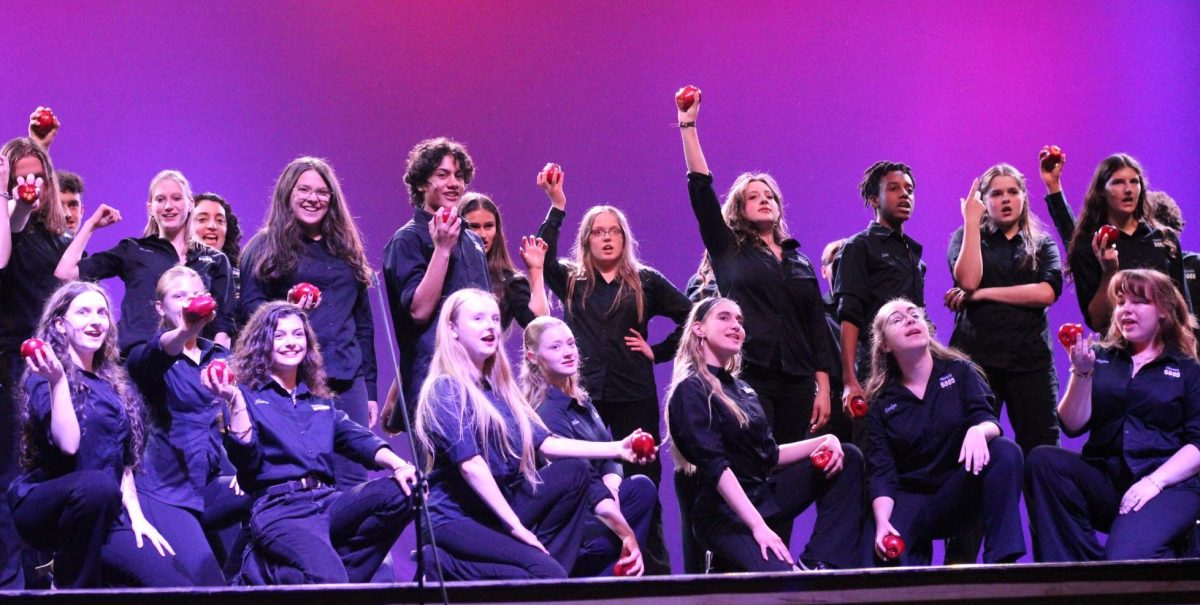
Many school programs, from athletics to performing arts will feel the effects of a tightening budget, but according to Garick, they will try to conserve as many programs and opportunities for students’ success as possible.
“We know that students learn both inside and outside of the classroom,” Garick said. “[We are] deeply committed to making sure that we continue to have things like marching band and the arts, all of the things that help our students become well-rounded humans, and also give them a connection to the school.”