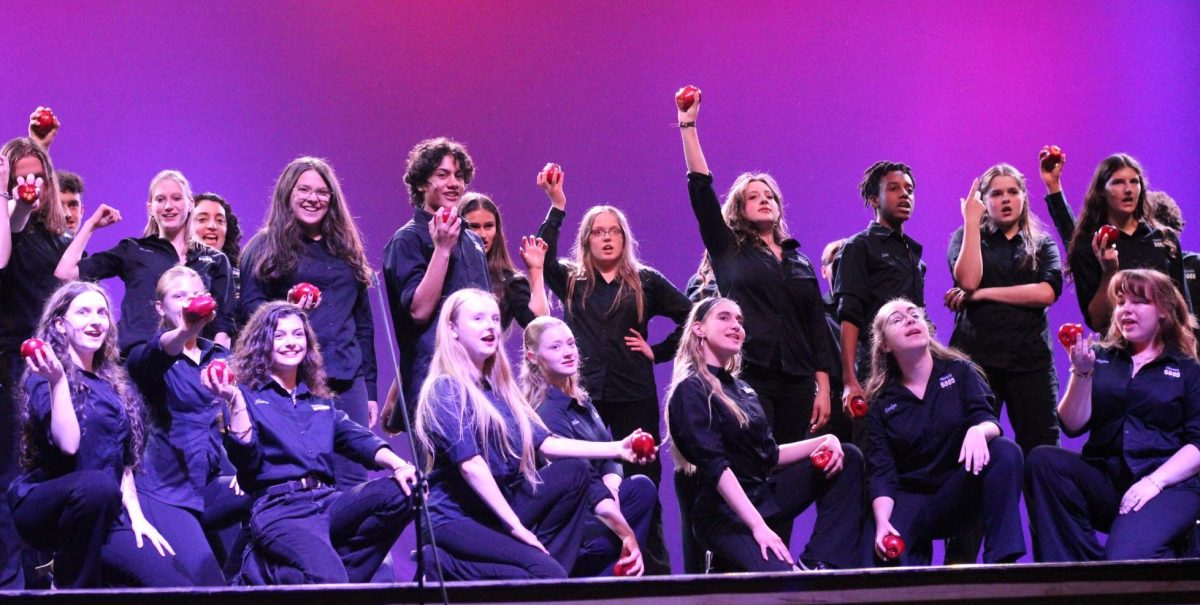
Churches and choirs pretty much go hand-in-hand; and the Choir MPA only strengthened that bond by giving the Hagerty Choir a clean-sweep of superiors.
The MPA was hosted by the choir at Tuskawilla United Methodist Church on Monday and attended by students from all over the district. The ensembles took home straight superiors across the board, representing the highest possible ranking in the state’s evaluation system. For the students involved, the good feedback was the result of months of rehearsals and classes to practice the necessary skills.
“Practicing for this event, we worked a lot on getting our vowels tall, because when you’re singing in the 80-person choir, it’s very easy for a couple people to mess up the sound for everyone else.” sophomore Evelyn Ortiz-Tatarka said. “Everyone has to be unified. There’s so many of us so we can really [only] get so quiet, so it’s just finding that balance.”
Senior Carys Mielke, who sang for the Concert Specific and Soprano-Alto choir, said that small detail makes the difference between a superior, good or fair.
“They evaluate on tone quality, how your vowels sound,” Mielke said. “If anything’s too sharp, they’ll note it down, [and they evaluate] your volume, and how it changes throughout the piece,”
In February, the program performed a pre-MPA concert to practice outside of class time and rehearsal, as well as practicing in front of other spectators.
Students also spent time analyzing recordings of their own performances to identify the technical flaws before performing for the official judges at MPA. Whether in class or the real deal, members must be able to sight read a section, and be evaluated based on how well they can read the notes and how well they perform.
Performing for the judges was not the only challenge; choir members found the acoustics to be a challenge as well. The groups performed at a church, and the setup and sound of the room was very different than what they were used to.The way sound waves resonate off of church walls is very different from those in a hall or choir room for example, and therefore also affects how they hit the judges’ ears, which can change the evaluations.
“I think the only thing that messed us up was that we were performing in a room that was very wet, which is the term when sound is kind of absorbed into the walls,” said Mielke “We couldn’t hear ourselves as much. So, I think practicing in conditions similar to that could help the future.”
Despite the acoustic challenges, the program’s various groups—including the Combined Treble, Tenor-Bass, and more—all maintained the school’s high standards. For the participants, the straight superior rating is a validation of the choir’s internal culture.
“I like the community it has, and I like singing,” Mielke said. “It’s very fun, and everyone’s really sweet.”