While students this winter season have been focused on bundling up to stay warm, swarms of bees have been mistaking campus for an all-you-can-eat buffet. Their favorite dish? Students’ lunch.
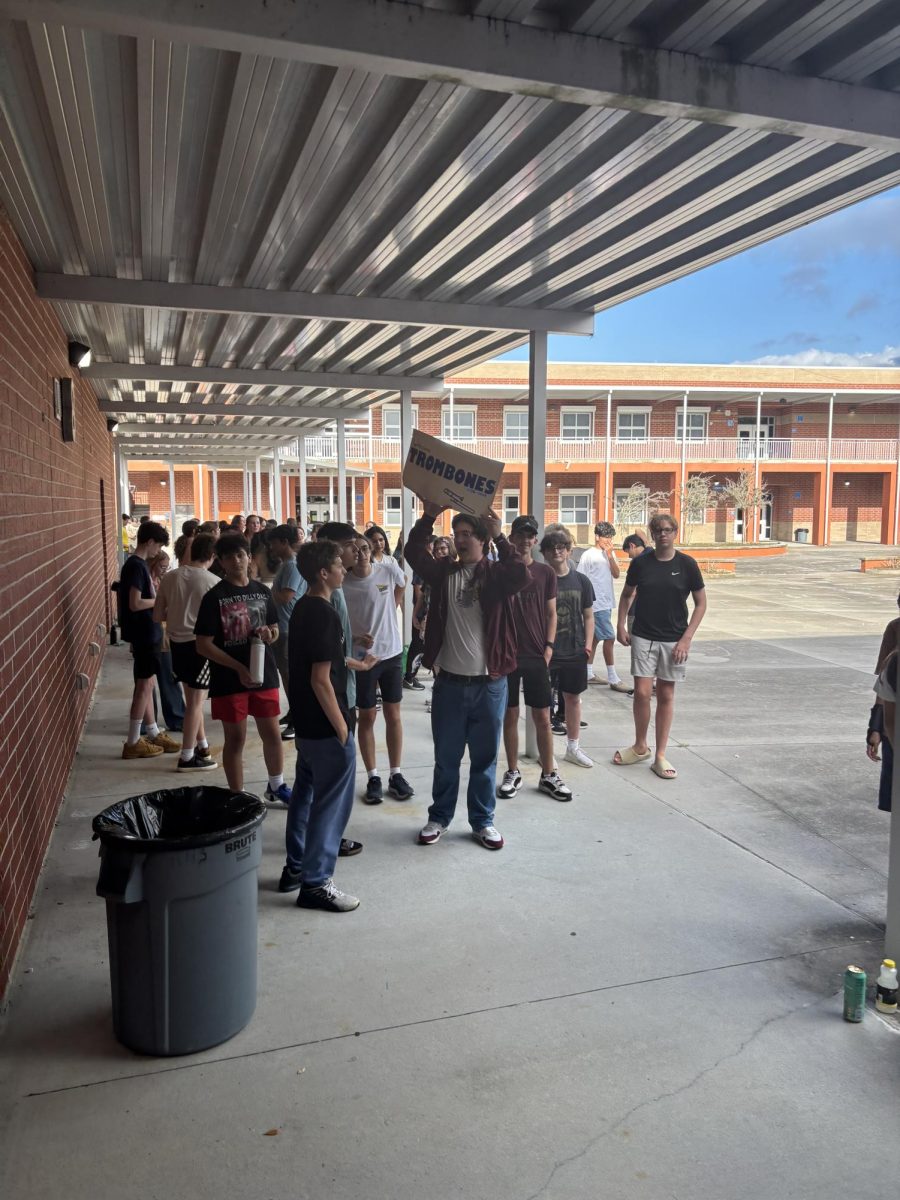
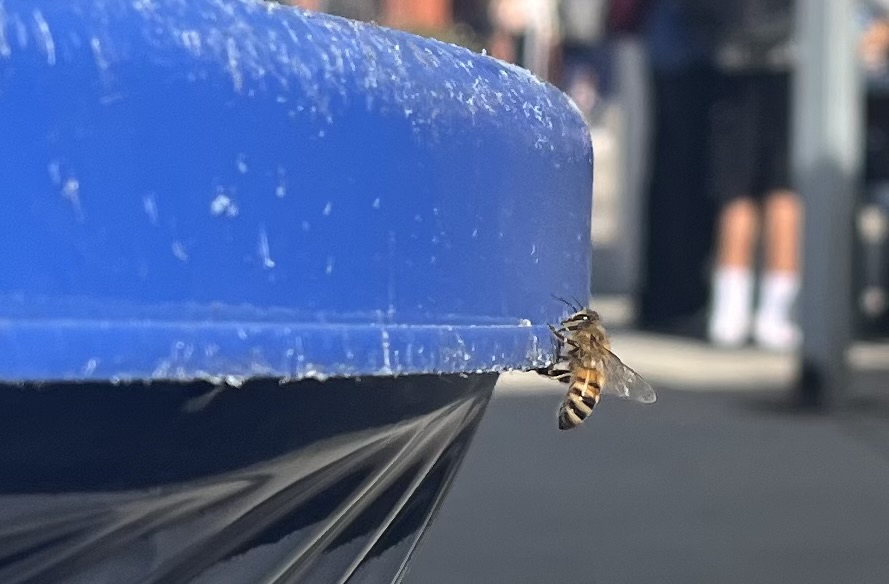
There has been a noticeable rise in bee activity across campus, especially near outdoor lunch areas and by trash cans. The increase has drawn attention from students and faculty alike, prompting administration to seek expert guidance to explore potential solutions.
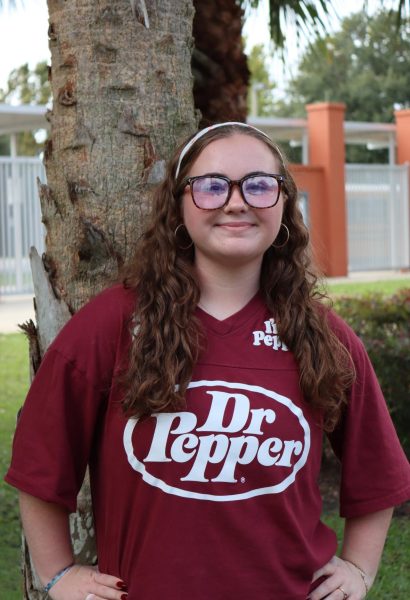
Junior Mariah Baez eats lunch near the trash cans and faces the wrath of the bees daily.
“The bees annoy me so much,” Baez said. “They have been in my food, in my hair, and in my personal bubble invading my privacy.”
Assistant principal Jason Maitland confirmed that the number of bees on campus is higher this year than in previous years. The bees, though always present, are mainly active during lunchtime, when food waste becomes more accessible. Although some students might be concerned about being stung, Maitland noted that the bees have not posed an issue for him personally.
“They do not bother me because I do not bother them,” Maitland said.
The bees, a typically non-aggressive strain known as western honeybees, typically remain focused on food sources and avoid people unless disturbed.
The main reason for the abundance of bees on campus recently is that they have to store up food for the coldest winter months. Bees search for food to gather for their hive, which is at peak capacity during winter. They are mainly attracted to the trash cans and any food (especially sweets) that are not properly disposed of, as well as sweet perfumes and brighter colors.
In response to the rising bee presence, administration has contacted both the Seminole County Public Schools facilities department and the University of Central Florida’s College of Sciences for guidance. According to Maitland, however, there are limited options for preventing bees on school grounds.
“Both have said there really isn’t anything we can do to stop the bees from congregating around the trash cans,” Maitland said.
Because bees are protected and play an important ecological role, removal or extermination is not considered an option unless human safety is at immediate risk.
Despite the challenges, efforts to address the issue are ongoing. The school has begun researching a variety of measures, though many remain in early stages of exploration.
“We have looked into some preventative measures and are currently exploring some solutions,” Maitland said.
These possible solutions include changes to trash can design or lid coverings, scheduled cleanings during peak activity hours and adjustments in waste handling after lunch periods.
While there is currently no definitive answer to the bee problem, the administration plans to continue trying to reduce bee activity around campus trash cans while maintaining protection of the bees and ensuring student safety.
“We will continue to try and research some preventative ways to reduce the amount of bees flying around our trash cans,” Maitland said.
For now, students are encouraged to properly dispose of food waste, keep trash can lids closed when possible, refrain from disturbing the bees and avoid wearing sweet scents to school if the bees are really getting under their skin.