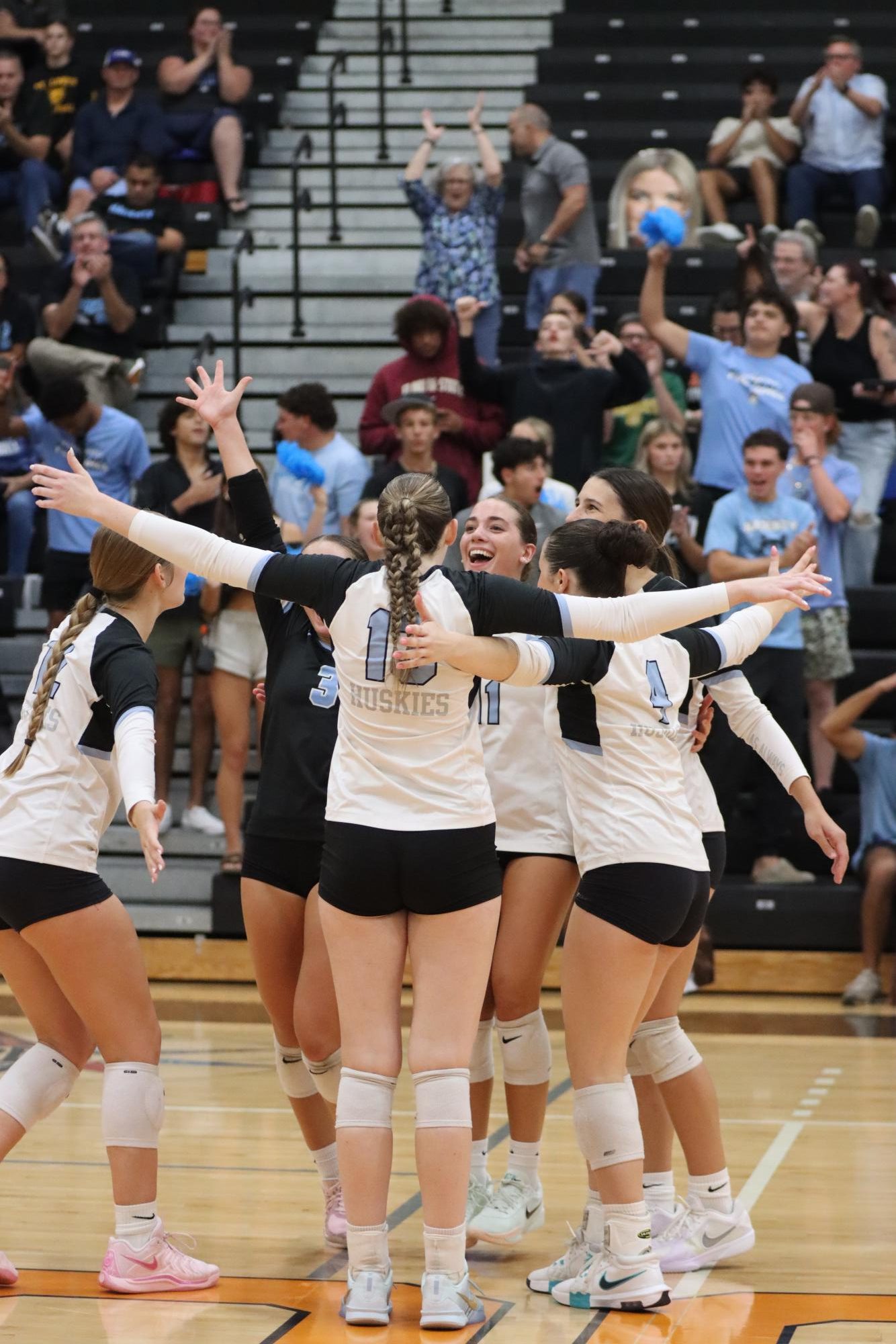
Friday Nights at Sam Momary stadium, fully packed spring games, major victories over conference rivals and dominance in several sports at the school remind us how powerful sports can be. They can unite communities, bring together unlikely friendships and serve as a sense of pride to people around the world and here in Oviedo.
But before our athletes ever put on a Husky uniform, many have gone through the youth sports pipeline. However, one that has become increasingly more flawed.
Youth sports in America are no longer just about development and fun. They have become commercialized, political and overwhelmingly expensive. Travel leagues, Amateur Athletic Union programs and elite clubs have turned community-led organizations into profit-driven talent “development.” These companies have created the youth sporting industry, and according to the Washington Post, an industry that took in $40 billion the past year (2024-2025).
The most disturbing trend? Youth sports organizations are being run as corporations with profit above all else. This results in prices for families exploding in recent years, with some clubs climbing into the thousands of dollars for seasonal tournaments and practices.
But the real issue isn’t just the price tag. It’s what the price tag represents. When access to high level competition depends on how much a family can pay, youth sports stop being merit-based. They are earned through a pay to play system. The athletes with the most exposure, best coaching and most modern facilities facing off against the strongest competition are often the ones who have families that can afford these advantages. Meanwhile, talented kids in lower income households are forced to settle for fewer resources or step away entirely.
This begs the question: how many potential students at the school never got the same development opportunities because they couldn’t afford this expensive pipeline? How many players get kicked out before they could even compete?
This pay to play model also changes the culture around youth sports. Parents are now investors, and coaches are providing services. Playing time can often feel tied to someone’s purse rather than to the game itself. This affects how developing players play their respective sports. For example, in order to attract the most exposure on the court, AAU basketball players force shots and don’t develop their team game, which can cause issues down the line when high level coaches realize they have nine individualistic players trying to compete as a unit.
The focus becomes highlights instead of good habits, and players are chasing attention rather than honing in on fundamentals. Team concepts such as communication and trust take a backseat while individual stat lines and social media clips take the priority. Those might help in a big weekend tournament, but it doesn’t build complete athletes.
Another way the new era of youth sports has changed the landscape is by pressuring children to specialize earlier than ever. “Athletes” barely meeting middle school age are given linear choices when it comes to sports. Choose one, and do it year-round. This replaces the revolving cycle of seasonal sports that children used to take part in, no more do athletes past 13 or 14 play more than two sports in a single year.
This specialization creates burnout, and for some, the love of the game just completely disappears. So how do we fix this?
First things first, it’s not about getting rid of travel or paid private sports completely—competition is good, and traveling to play against other strong teams is crucial in making athletes better. However, for the vast majority of aspiring athletes, it shouldn’t feel like the only option.
Funding for local leagues and school programs should be improved, as not everyone needs to travel across states to just improve at the game. Strong coaches are needed to orchestrate consistent practices routinely, to give these programs a legitimate feel.
It also wouldn’t hurt to stop acting like every middle school “prodigy” needs to build a recruiting profile. Allow kids to play multiple sports, and let them be the ones to figure out what they enjoy. The best athletes in the world didn’t lock themselves to one expensive club and force their way into being recruited.
Overall, the concept of a sport should ultimately reward work and not wallets. Once America can get back to that mindset, youth sports won’t just produce better athletes, but teammates, teams and communities.