So, you’re bored. What do you reach for? A book? A journal? Your phone? Do you get up and take a walk, or do you stay inside and do nothing?
Most have felt this struggle. The war between choosing to be productive and sitting down to do something that takes minimal effort. Brains tend to crave instant gratification, a way to feel entertained and rewarded. This is found in social media, online games or texting with a friend. What does this do to the brain and what are ways to avoid simply wasting time?
Students themselves may recognize how easily time can slip away when getting lost in doing nothing.
“[When I’m bored], I go to whatever seems easiest and requires the least work and makes me feel satisfied,” senior Arden Newman said. “I always think about how short life is and how I shouldn’t be wasting so much time.”
Students also notice how easily they get attached to things that give them a short burst of dopamine.
“Our generation especially has grown a large attachment to short-form content,” sophomore Ryan Han said. “Because it gives quick dopamine, it causes you to not have to think much.”
That “quick dopamine” is part of what makes scrolling so hard to stop. Most kinds of media, whether that be TV shows, movies, or social media are designed to provide constant, fast-paced rewards, making the brain crave it constantly—acting as an addiction.
“I think we struggle with productivity as students; most of us have procrastination problems,” senior Nicholas Batista said.
According to the World Health Organization, Physical inactivity is one of the leading risk factors for noncommunicable diseases such as cardiovascular diseases, cancer and diabetes. People who are not sufficiently active in daily life have a 20% to 30% increased risk of death over people who are sufficiently active.
The struggle between productivity and inaction is something most people experience, and for many, it functions as a coping mechanism. The stresses of work, school and relationships among other things can be too much, leading people to seek solace elsewhere, draining them. That exhaustion often leads to putting things off, choosing rest over effort—even when there are better ways to spend that time.
“After school, I’m exhausted… the energy I have is minimal,” sophomore Zain Khan said. “Doing more physical things would require energy I don’t have.”
Sometimes motivation is not always about feeling ready, but about getting started.
“The hardest part of assignments can honestly be starting,” Han said. “[I try to] set aside just 10 minutes without any distractions to do the task.”
This idea, though it may seem small, could be one of the many effective ways students overcome inaction. Instead of waiting for motivation to come naturally, sometimes creating it through action can make it simpler.
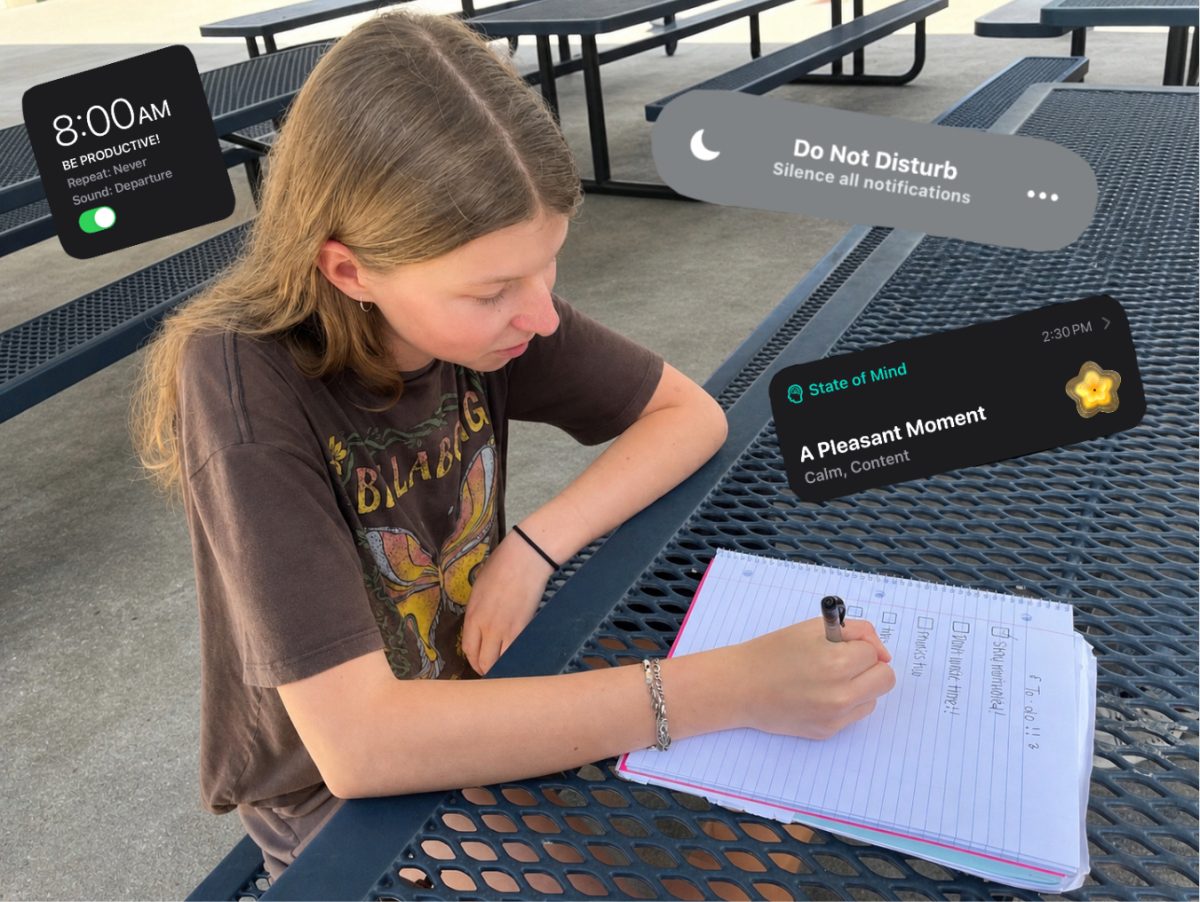
“I make a lot of to-do lists. It just really helps me to stay motivated throughout the day and discipline myself, and it’s so rewarding to see all of the boxes checked off at the end of the day,” senior Jayla Tirado said.
By building routines, students remove the need to constantly decide what to do next, making productivity more automatic.
Motivation can also come from removing oneself from their current feeling and thinking beyond the present moment into the future.
Tirado used to struggle to keep her grades up because of lack of motivation to study for hard exams. During her junior and senior year, she made it a point to craft flashcards for all of her tests, making it much simpler to study.
“Think about the future and how much growth you will have in the future if you actually get up and do something, and how satisfied you’ll be when you do it.” Tirado said.
This long-term mindset might help to rethink tasks that may feel boring or unnecessary in the moment. Instead of focusing on how something feels now, actions in the present can be connected to future goals.
Eliminating distractions as much as possible can also lead to having more productive time.
“I tend to leave my phone by my bed whenever I’m away so I don’t use it as often,” Batista said.
This simple habit can lead to increased focus when engaging in activities, since social media and endless scrolling seem to drain energy and motivation from students. These habits do not require major life changes. Instead, they focus on consistency. That is, choosing small, productive actions over time.
It may seem like the problem in all of this is being bored regardless of the activity. However, studies from Harvard University show that boredom can actually encourage creativity. Without constant stimulation, the brain is forced to think more deeply, which can lead to new ideas or motivation to act. Sitting in silence and allowing the brain to think for itself activates the brain’s “default mode network,” simply meaning that since there is no stimulation to the brain, deeper and more existential questions pop up in the mind, which is proven to be very healthy.
Motivation is not always about the long-term or a huge change; students show that it can simply be marching through the day with passion and setting goals for change to happen.