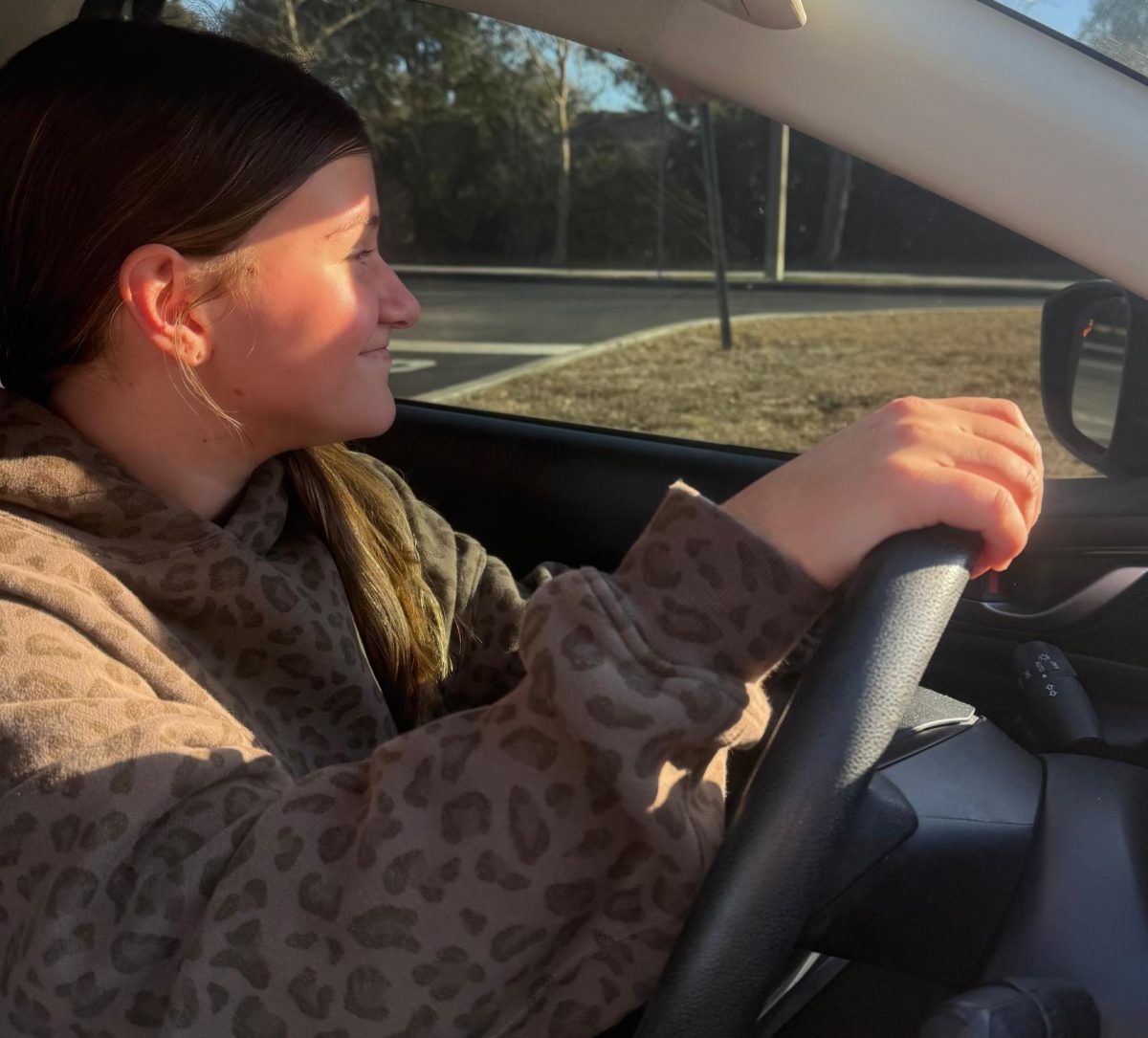
Anxiously staring at a computer screen, waiting for the magical link to appear for the chance to buy a student parking pass. Every summer, it’s the “Parking Permit Hunger Games.” For the students who click the link fast enough and check out within the four minutes it takes for the passes to sell out, this is only the beginning.
After receiving parking passes, students then enter the next phase of being a student driver, which can best be described as a year-long game of musical chairs. Anyone watching the parking lot and surrounding streets can see many different types of teenage drivers maneuvering around each other to find a parking spot and get in and out of school on time.
Asked to describe their driving in one word, students’ chosen descriptive words fell on two ends of the safety spectrum. On the safe side, some students described their driving as “cautious,” “respectful,” “confident,” “calm,” “safe” and “careful.” In contrast, other students described their driving as “exotic,” “annoying,” “scary” and even “Florida” driving.
“I’m genuinely scared when driving around Oviedo; there are so many horrible drivers,” junior Naomi Markx said.
This includes teen drivers who have only been driving for a few months, or even weeks. New drivers often describe themselves as simply wanting to make it from Point A to Point B safely. Although making it to class, meetings or practice on time might be the primary goal, it does not always work out that smoothly.
Amy* who described herself as a “cautious driver,” still ended up in a stressful situation after parking in a tight parking spot at a local Starbucks. As she was rushing to get out of the car, she ended up opening her driver’s side door too quickly and flinging it in the car next to her, leaving a dent.
“I thought it was another Hagerty student’s car and I panicked,” Amy described. “I didn’t know what to do in the moment. I ended up leaving a note on the car because I was too embarrassed to wait for them to come back to the car.”
Falling in line with research reports indicating 77% of car crashes occur within 10 miles of drivers’ homes, Bella* described being caught in an unexpected and stressful situation pulling out of her driveway.
“As soon as I started backing out of my driveway, another car was laying on the horn,” Bella said.
When Bella turned to look at the car, the other driver tried to hit her. This scenario finally ended when the driver following her got stopped at a red light while she was able to get through the intersection just as the light was turning red.
Carlos* described a similar intimidation situation when two Dodge Chargers surrounded him while getting off a highway.
“They came up behind me, swerved around, and cut me off going a hundred [miles per hour],” Carlos said.
Being subject to this type of road rage and reckless driving can be unnerving for new drivers who do not have enough experience to know how to react. However, student drivers describe getting plenty of opportunities to react to road rage in the school parking lot.
The majority of students have seen road rage in the parking lot or have experienced road rage themselves because of how other students were driving. Student drivers frequently weave around other cars, cut each other off, and exit out of the entrance to the parking lot.
Many students also admitted to using their phones, putting on makeup or getting distracted by choosing music when driving.
“I use my phone for texting, and everything really, while driving fast and furious,” Fiona* said.
This aligns with reports indicating distracted teen drivers are at least a 10% increased risk of engaging in risky driving behaviors. In light of such findings, medical professionals report a need to support teen drivers in practicing engaged driving by being continuously attentive and focused.
“Once, I was so distracted, I ended up driving on the wrong side of the median when pulling onto the road,” Andrea* said.
Overall, most students rate themselves as safe drivers. On a scale of one through ten, with ten being the safest, the average score was 7.5, which should give students, faculty and visitors hope when venturing in and out into the parking lot. especially when considering upcoming drivers preparing to drive to school.
“I’m taking my time learning to drive. The more practice I get, the more confidence I get. Hopefully next year I’ll get a parking pass and be driving myself and friends to school,” sophomore Taylor DeWitt said.
*Some student names were changed to maintain anonymity at their request.
What kind of driver are you? Take the quiz!
Results
You throw caution to the wind. Rules weren’t meant for you. You might go through lights when they’re orange, or cut off people, but only when they need to be cut off.
Driving isn’t easy, and there are lots of things trying to bring your perfect record down. Rules are there for a reason, and you don’t want any scratches on your baby, anyway.