“Citizen Kane,” “Casablanca” and “Shrek.” What do all of these movies have in common? Seemingly nothing, but in Film Analysis, students analyze all these films for their deeper meanings.
Jaimie Ling teaches Literary Analysis of Film to juniors and seniors only, in periods first, seventh and sixth. Intro to Film, which is for freshmen and sophomores, is taught by Lydia Allen in periods seventh and sixth. Both classes have the same learning structure, but Advanced Film lasts a full year while Intro to Film is only one semester.
“We take the time to introduce concepts of film, from the beginning of film, the inception of film, to the nuances of film, like angles and lighting and the director’s vision, etc,” Allen said. “We also pull in concepts that align with English and literature, like color symbolism.”
Students learn the different genres of film, the characteristics of each director’s filmmaking style and the themes present in the movies they watch.
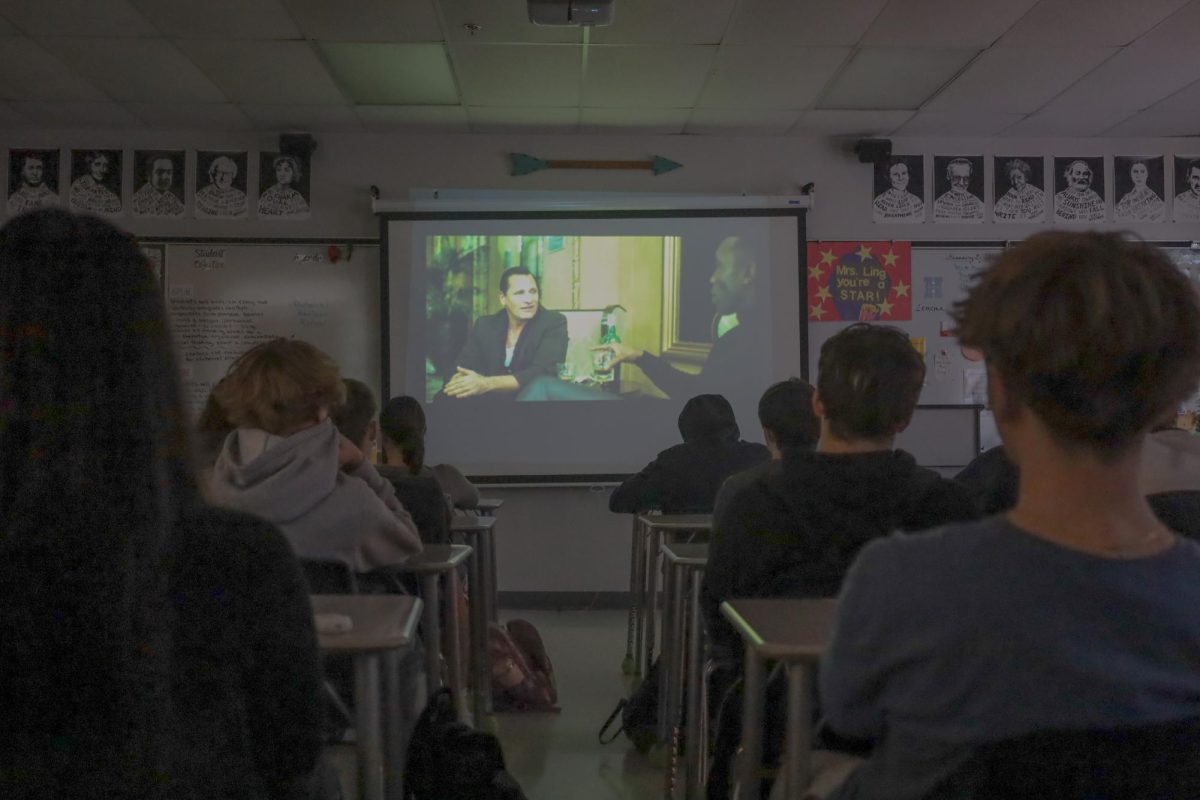
After each movie, students complete a viewing quiz to test their recall abilities on what they remember about the film, and at the end of each unit, students take a full open-note exam. They also engage in open discussions about what themes and elements they noticed in the film, and what their overall opinion on it is.
In Intro to Film, Allen currently has her students watching “Singing in the Rain.”
“The thing about ‘Singing in the Rain’ that I like teaching is that it’s so long ago for the student population,” Allen said. “But when they get to see it and actually start enjoying it, it opens their eyes to [the fact that] there’s such a huge film world out there to explore.”
Students learn how to be more insightful when looking at the way films are made, and analyze how each film conveys their tone and purpose through their cinematography.
Junior Ibiza Boschetti took Intro to Film because she wanted to further develop her interest in film. Since taking this class, she has learned to see the bigger picture in films.
“It’s a very leisurely class,” Boschetti said. “There [isn’t] a whole ton of work, there [isn’t] any homework. When I come in, that’s about the best effort that I have to put in. I don’t have to take any work home, unless I miss a day and have to re-watch a film.”
In both Film Analysis classes, Allen and Ling have incorporated student feedback into their curriculum to create units students enjoy. Some of these units include whodunit, biopics and Shyamalan thrillers for Literary Analysis of Film, and sports and animation for Intro to Film.
“At this point, I’ve developed a curriculum that is pretty student friendly, and student tested,” Ling said. “For the most part, these are movies [that] year after year, students are like, ‘I love that movie.’ That’s part of my objective too. I want this to be a nice period of the day where, especially if you have a heavy course load, you can just come in and watch a film.”
Students who wish to see the intention in film cinematography and see past the surface level in films of any kind should consider taking Film Analysis.
“Film is art, and art makes us feel, and we need more feeling in this world,” Ling said. “I really do feel strongly about this elective. But I take it very seriously because I feel like going out into the real world, you are a better student and a better person. That serves you always, and it serves your community too.”