On Sunday nights in Philadelphia, it doesn’t really matter whether the Eagles win or lose—the second the players step on the field, the city comes to life. Someone is climbing a traffic light, someone is hugging a stranger in a bar and someone is yelling at the TV about a blown call. It is loud, chaotic and strangely unified, as if the entire city has agreed (just for a few hours) to care about the same thing.
In Florida the fanbase is not nearly as unified—there are fans from all over the country. Someone walking down the street can see someone in a Green Bay Packers hoodie, a Chicago Bears flag on a house and a Kansas City Chiefs License plate. Florida is a melting pot of National Football League fans, and the identities and cultures that come with them.
But no matter what part of the country it is, pro football feel like something bigger than entertainment.
Identity:
Part of this energy comes from identity: for many, being a fan feels like joining a community that already knows who they are. Whether someone grew up with a hometown team or picked one later, supporting a team creates a sense of belonging.
Fans who grew up with a hometown team have watched their team and players grow with them. Fans will tie this team to their home, family and personal story.
As a proud Chicago Bears fan, sophomore Laila Gainey grew up watching football with her family. Her dad—who played football all throughout high school and college—introduced her to the sport.
“My whole family really likes watching football,” Gainey said. “When the Bears are on, we all get together, sit on the couch and we vibe and watch football.”
Fans often link significant events in their own lives to those in the NFL. For instance, one might say “I graduated when the Steelers won the Super Bowl in ‘09” .
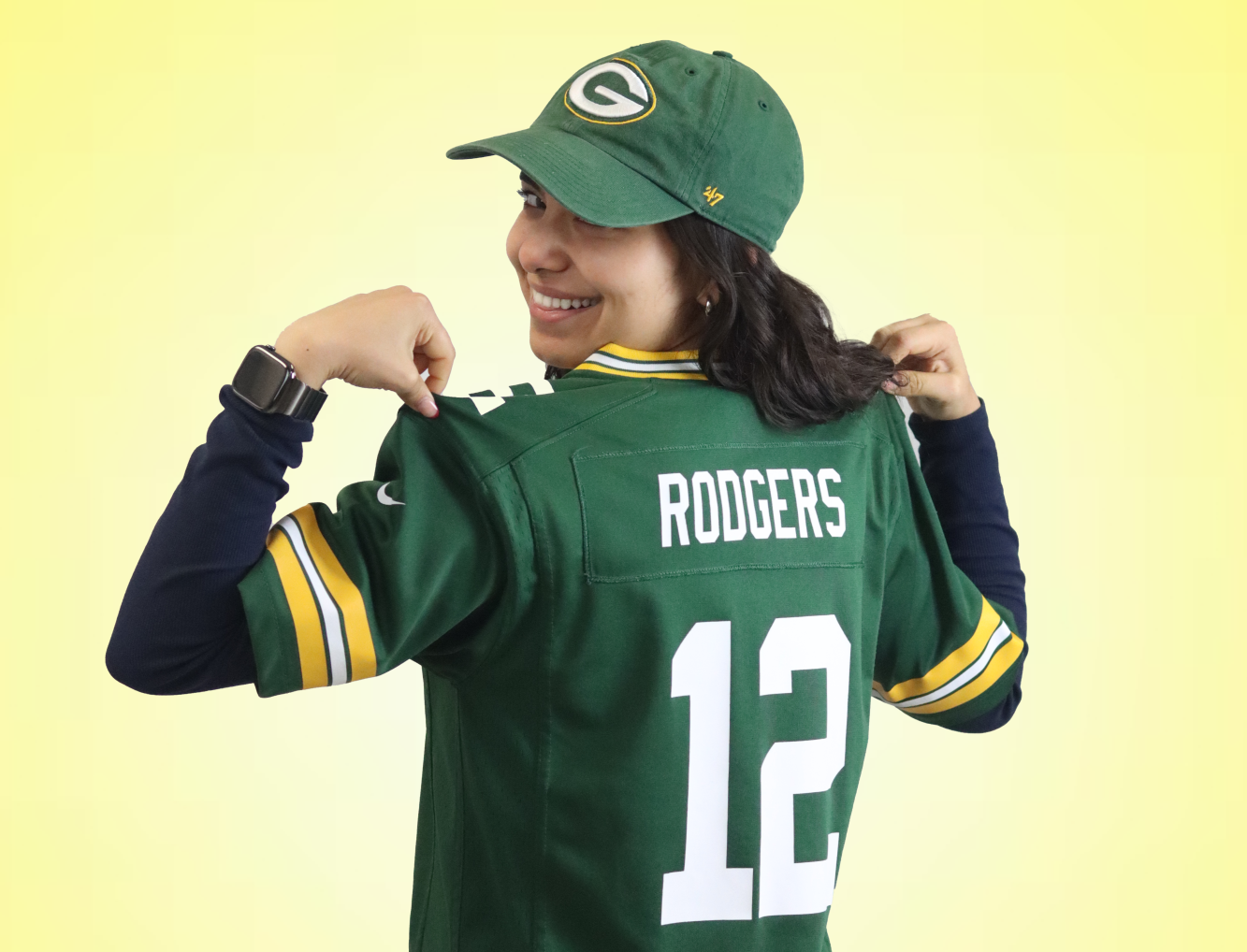
NFL fans wear the colors of their favorite team, take on personality traits of their favorite players and befriend other people who love that team. They take football to another level, integrating it in every corner of their life.
Senior Vida Nouri is a devoted Washington Commanders fan, along with the rest of her family. Gathering on Sundays is a game-day is a tradition, allowing Nouri and her relatives to get together and root for their team. But Nouri shares the connection with more than just her family.
“It could be an 85-year-old World War II veteran, and if I see they have Commanders anything, that will be an automatic source of connection and I will go out of my way to say ‘Hey, love that whatever,’ Nouri said.
Dr. Daniel Wann on the psychology of sports fans points out that identifying with a local team lowers loneliness and raises self-esteem. Fans do not need to share political views, age or background with each other; they just need to know the quarterback’s name.
That is enough to strike up a conversation or high-five a total stranger after a big play. For this reason, it is common to see conversation starters like, “How about that game last night?”
The players:
For some, the allure of football stems from more than just the community. Many become invested in the lives, personalities and victories of the players themselves.
Junior Nasira Baldwin is a fan of the Kansas City Chiefs.
“When you root for a team so devotionally, you support them not only as people but as players. It’s like a community,” Baldwin said.
Fans do not just support a logo; rather, they tether themselves to individuals whose stories and traits they find meaningful. Sometimes it is a player whose work ethic mirrors their own, or perhaps someone with an awesome comeback story that impresses them. Sometimes watching a player’s success feels like fulfilling a personal dream.
Even if they do not realize it themselves, fans often pick favorite players because they reflect values they admire such as loyalty, leadership and resilience.
Senior Luciano Burd is a diehard Miami Dolphins fan. His two favorite players are running back De’von Achane and wide receiver Jaylen Waddle because of their loyalty and devotion to the team.
“Seeing them stick with this team even through the rough makes me think in my own life [that] if I have rough times I can persevere,” Burd said. “I see that as how I stay loyal to the people around me”.
Rivalries:
Few things fuel the fan fire more than rivalries. Rivalries might be the most dramatic expression of the “us vs. them” instinct that many secretly enjoy. They turn a regular game into a story with its own heroes, villains and “lore.” A Buffalo Bills fan does not just dislike the Miami Dolphins “a little”; they feel it in their bones.
“Some of my closest friends are Bills fans and I’ll [flex] on them any chance I get,” Burd said. “As soon as the Dolphins beat the Bills weeks ago, I was going off at my friend. It was so awesome.”
Rivalries give fans a chance to prove something, socially and emotionally. Beating a rival feels like winning twice: your team wins, and you win bragging rights. However, rivalry is not always violent and petty.
“I prefer rivalries when they’re not super dirty or anything, just two teams that have respect for each other really going at it,” senior Ian Ross said. “I think it can make [the sport] more fun and interesting.”
Geography often fuels these intense rivalries. When cities are close (as is the case for the Baltimore Ravens and the Pittsburgh Steelers), fans overlap and things get heated.
Sometimes, a rivalry can start over a very specific change, such as when star running back Saquon Barkley left the New York Giants for the Philadelphia Eagles in 2024. Not only were fans outraged, former Giants players saw this as a betrayal as well, coining the nickname ‘Snaquon Barkley’.
Through thick and thin:
Nothing reveals the psychological side of the football fandom more clearly than how people feel when their team wins or loses. Even when they tell themselves, “It’s just a game,” it never really is.
Wins feel personal because they activate the same dopamine systems associated with achieving something personally. Losses hurt because the brain processes them like disappointment or even pain.
“[When the Bears win], I feel awesome. I feel like we can conquer the world,” Gainey said.
This emotional bond and shared excitement explains why fans keep coming back, even when their team breaks their heart. If a restaurant messed up an order half the time, customers would never return. But sports fans? They return every week, even when the odds are against them.
Fans will say “We’ve been great before; we can be great again,” even if it has been decades since their team won the Super Bowl. Some say this is devotion, while others deem it delusion. But it is that belief (and maybe some screaming at the TV) that helps fans sit through losing streaks, bad drafts and heartbreaking playoff exits.
In the end, the football fandom looks a lot like nationalism. It organizes people into imagined communities, giving them shared history, symbols and traditions. Fans can walk into a bar in their team’s jersey and instantly gain friends (or start fights). They celebrate, argue and complain together. That is why football matters so much to people: because in a world that is constantly shifting, it gives people a team, a story and a place to belong.