Nobody likes getting to school early. Whether they were staying with a parking pass, or being dropped off, one thing was for sure: It was always a pain. In the past, the school’s parking lots were flooded with hundreds of parked cars, with many more circling to find a spot, or waiting in line.
But every year, the packed car lines and filled parking spots become less of a problem.
So what changed? It is not as if the school’s population took a nosedive. With 2412 students, everyone is still going to school. In fact, just not in the way they have always been.
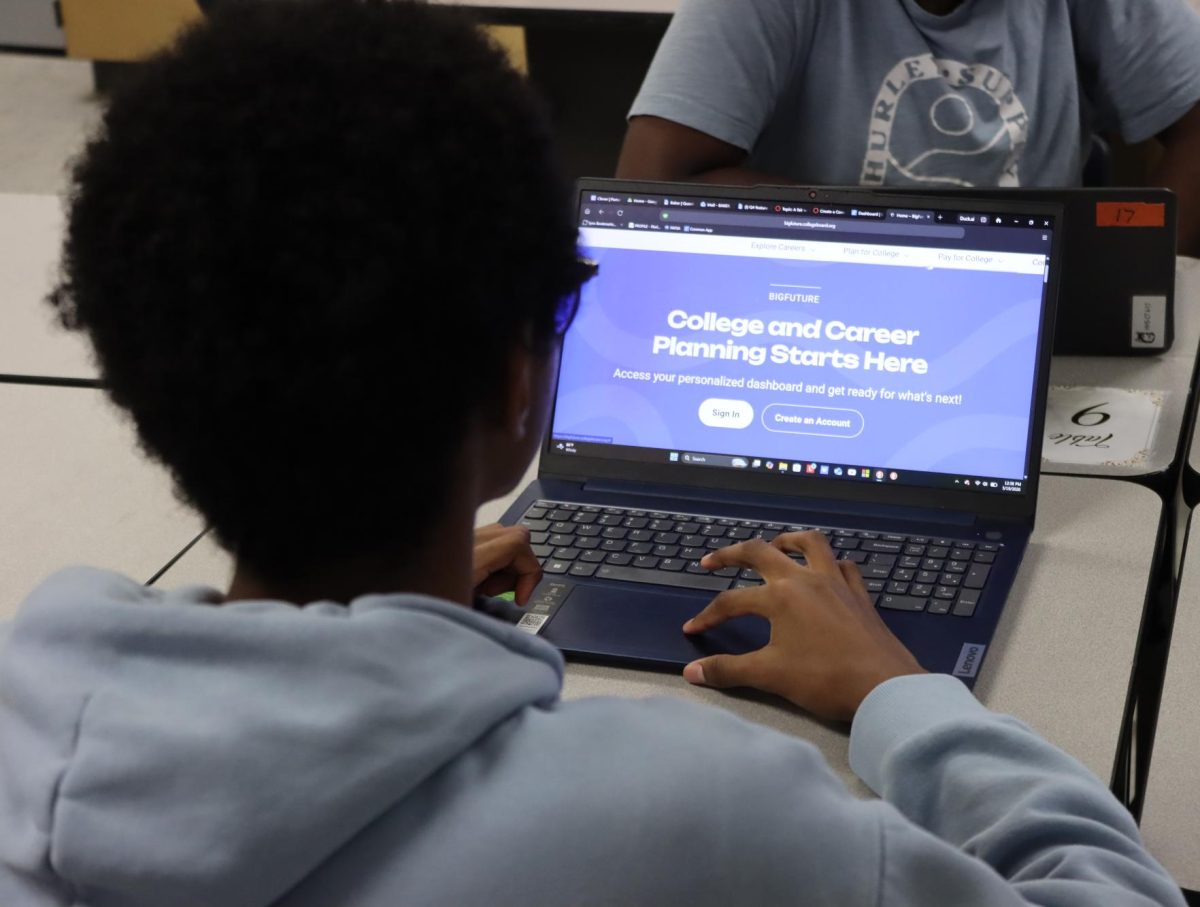
Hybrid learning, sometimes referred to as blended learning, is the approach to education that involves combining online and in-person classes.
Every year, students take advantage of this approach, electing to take some of their school periods off, favoring hybrid schedules with courses taken elsewhere, often online, and sometimes down the road at Seminole State through the dual enrollment program.
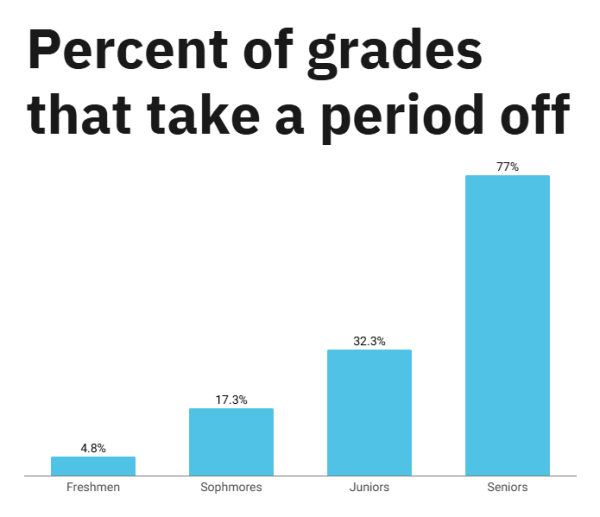
The benefits of hybrid learning are apparent, as the practice of being at school for a shorter period of time is certainly appealing, especially to upperclassmen who take on other extracurricular responsibilities. In fact, 77% of Hagerty’s senior class take at least one period off. In contrast, only 4.8% of freshmen drop a period.
Senior Alex Zimmerman only attends in-person classes for third, fourth and seventh period. With the reduced time spent at school, more opportunities have appeared outside the classroom.
“For one, I get nine hours of sleep each night, which helps me with my health and staying active throughout the day.” Zimmerman said. “ And I now have more time to train for cross country, and now for the upcoming track season.”
While the trend has continued to grow, this is not a new phenomenon. Florida Virtual School was founded in 1997 as the first statewide virtual school in the United States. Ever since, students have had the choice to take classes online. Moreover, dual enrollment began in 1955.
Though these programs existed, it was not common practice for students to use them.
“Prior to middle school, I didn’t even know what online school was,” senior Daniel Osborn said. Osborn takes three classes in person, while taking the rest of his courses with FLVS.
It was not until the COVID-19 pandemic, which forced students to go virtual, that the idea of switching up the regular high school routine was realized. An article published by John Hopkins University indicates that the percentage of students taking online courses has skyrocketed following the pandemic, with some states seeing an increase of over 50% in the years following.
So now, over five years removed from the pandemic, hybrid learning has taken a permanent and prevalent spot in high school culture. Out of all 2412 students enrolled at Hagerty, 921 students take at least one period off, a staggering 38%, with many taking more.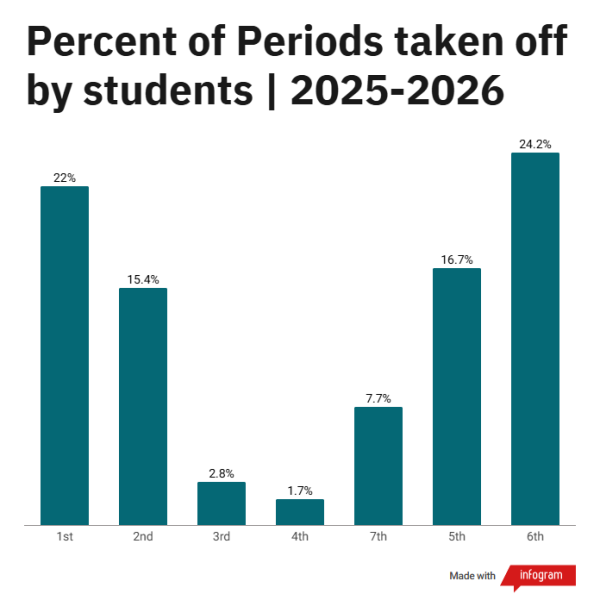
Though many students have taken advantage of the obvious benefits, it is not a perfect solution, and it certainly does not apply to everyone’s situation. For example, not everyone has access to other forms of transportation, as buses only run at the beginning and end of the day. Also, some classes are only offered during certain periods, prohibiting students from dropping them if they wish to take the courses they want.
“I’d like to take periods off, but my choir and band classes are first and sixth period respectively. Therefore I have to fill my schedule with other classes I didn’t really want to take such as teacher assistant,” senior Miriam Pierre said.
Furthermore, some students miss certain opportunities when making brief appearances at school, only to quickly go home. Aside from education, the in person school environment is rich with social experiences throughout the day that simply cannot be found elsewhere.
Osborn, who had gone completely online for the years following the pandemic, had made his return to the school with hybrid learning. This year he takes second, third and fourth period in-person, while enrolled in FLVS for the rest.
“Sometimes you miss things when taking online classes. I would barely see my friends, since school was where I would primarily spend time with them,” Osborn said.
When thinking back to the empty student parking lots, and hallways that are not as crowded as they once were, it is clear that the change in the school environment is real, and does not seem to be stopping. Some students have noticed that some things about the school just are not the same with everyone going home so soon.
“It’s especially noticeable with the pep rallies,” Pierre said. “In years past, it would be a struggle to fit everyone into the bleachers, but now we are struggling to fill them. The truth is that everyone goes home, and they don’t feel like coming back.”
But the issues with blended learning and the act of dropping periods does not end with personal complications among students and a potential downturn in school culture, as its effects are even seen in the classroom itself.
Government teacher Matthew Malkovich attests to such a claim, corroborating it with the fact that his first period class only has 12 students, while his third period is almost overflowing with 35 kids.
“I personally prefer a larger class size, as in my first period we just fly through and get through things so fast,” Malkovich said.
The class size disparity inevitably becomes an issue for many teachers, as they have to adapt their teaching styles and curriculum to accommodate both small and large class sizes.
Similarly, with fewer students in school, less classes are offered. For example, the long standing TV Production program had typically been offered at many levels across multiple periods of the day. However, starting this year, the course is only offered during at a single level during fourth period.
Furthermore, some teachers are not ready to, nor want to adapt to the online and blended environment, as face-to-face teaching has been the foundation of their entire career, and they wish to continue building upon that instead.
“When COVID came around, this virtual school stuff [was] not for me.” Malkovich said. “I need my people. That’s why I’m in this business. I like to interact. Try to give you the things you need to be successful on your AP test, or give you basic knowledge of government, and entertain you. Maybe give you a memory or two, and kind of give a perspective on life.”
As the school system navigates this new era of education, one thing is clear: hybrid learning is not just a passing trend. Whether it be for students to chase extra sleep, or for upperclassmen to pursue other opportunities outside of school, blended education is here to stay.